Reimagining nursery staffing at Famly
Childcare is governed by strict staffing ratios. Fall below the required number of qualified adults in a room and you're in regulatory violation. Exceed it and you're burning payroll on margins that are already thin.
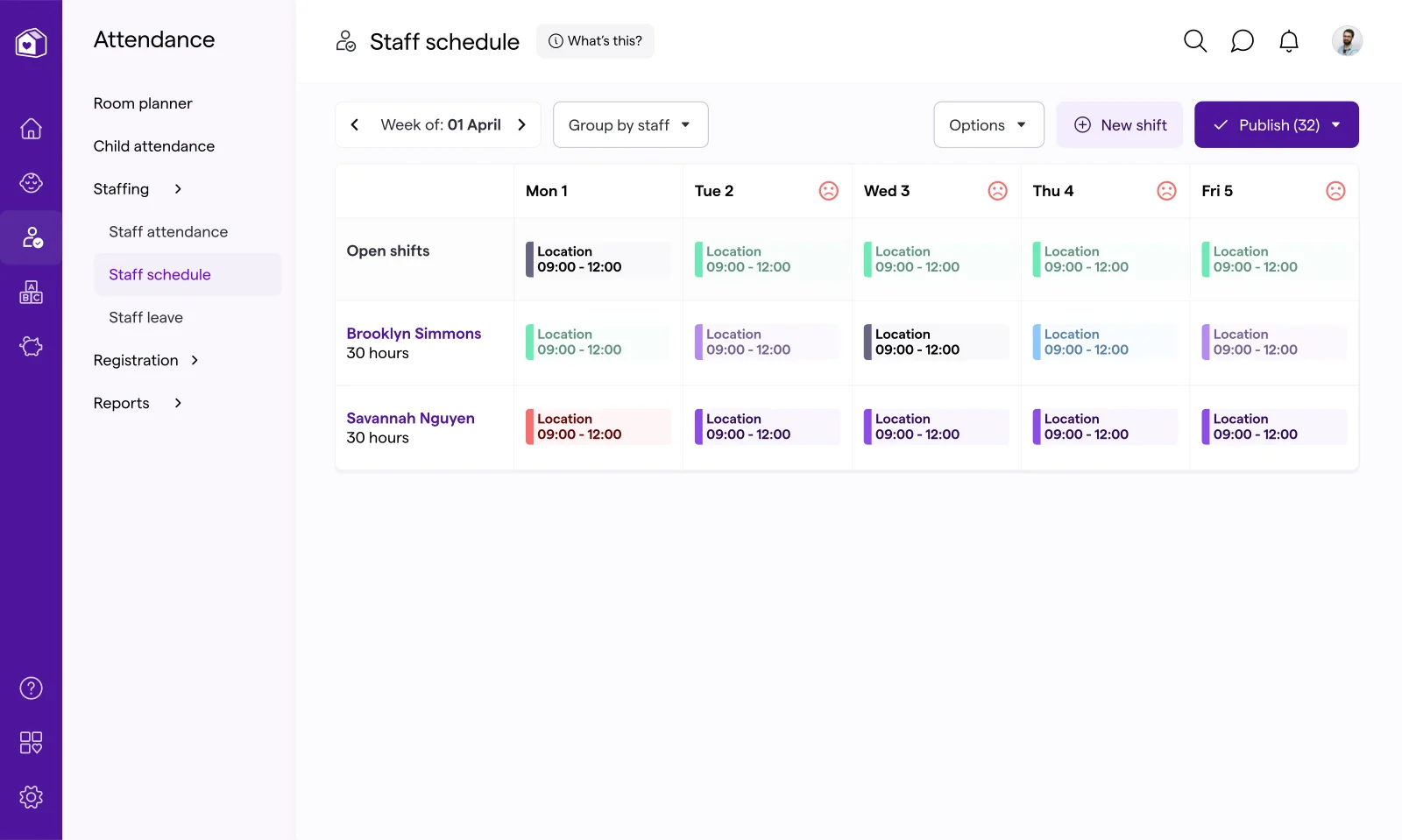
I designed a solution that helps over 7,000 nurseries worldwide keep ratios healthy automatically, reducing issues and turning time spent on scheduling from hours to minutes.
The problem
The managers responsible for staff scheduling were doing their best with tools that couldn't help them. A spreadsheet doesn't proactively notify you that Room 2 is short-staffed at 2pm on Thursday. A whiteboard that gets photographed and sent around on WhatsApp doesn't update when a staff member calls in sick at 7am.
Discovery process
I flew to Liverpool and Manchester to sit with nursery managers in their actual offices and watch them build schedules. I also conducted remote research with customers in the US, Germany, and Norway.
I was trying to understand the logic they carried in their heads and the dynamics of their work, including the social and unexpected aspects of it.
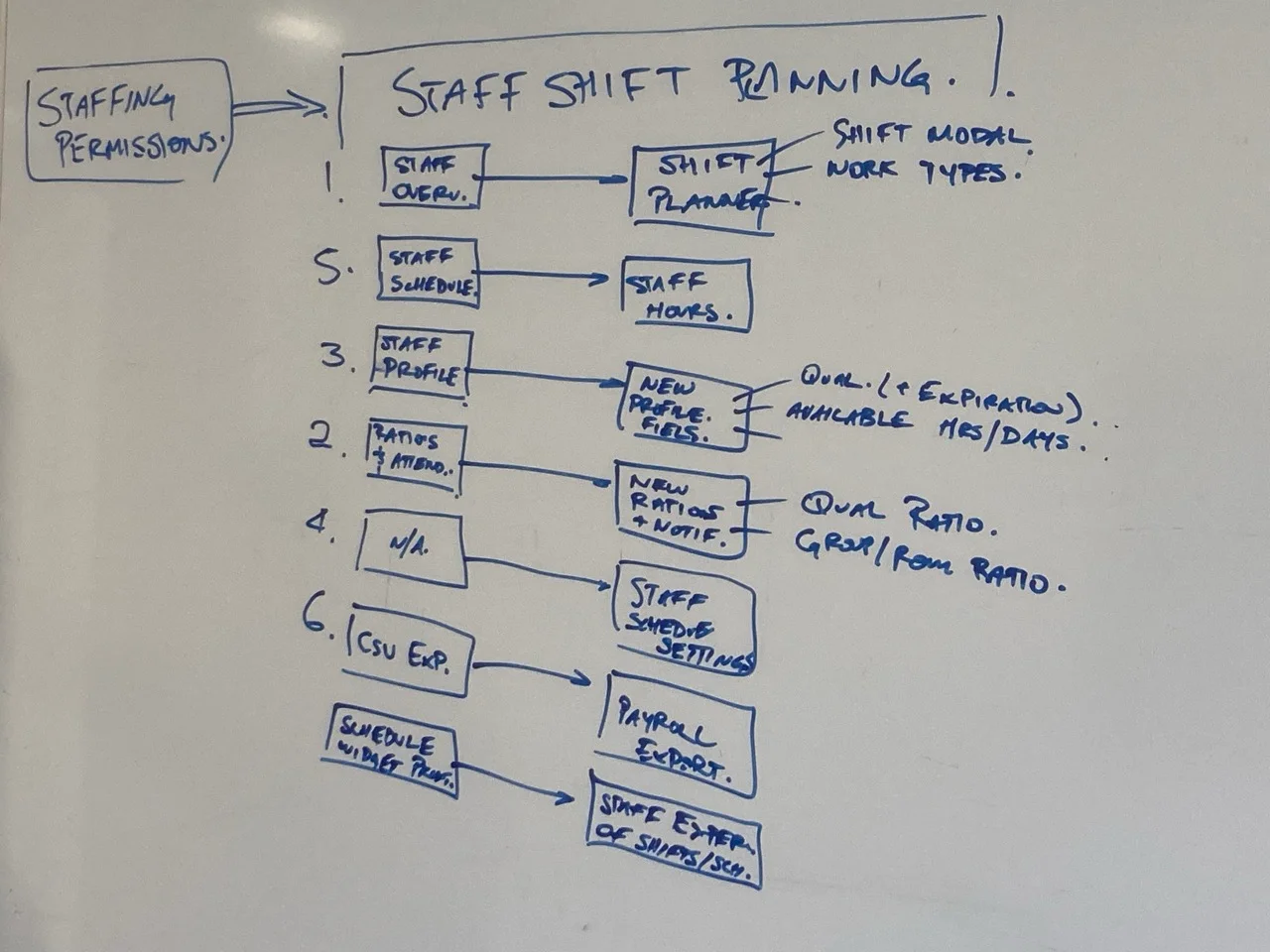
Managers were solving a constraint puzzle every week: who is qualified for which room, who is available, who requested time off, what do the ratios require at each hour, and what happens when someone calls in sick at 7am.
Shift information lived across text messages, paper notices, and verbal agreements. A practitioner checking whether they worked Tuesday afternoon might text their manager, check a photo of last week's whiteboard, or just show up and ask. There was no single source of truth.
The UK calculates ratios differently than Germany. The US has state-level variations. Each market's managers carried a different mental model of what "properly staffed" looks like. A tool designed for London wouldn't work for Munich without structural flexibility.
Synthesis and early ideas
Two key discoveries from the research guided where I spent my time:
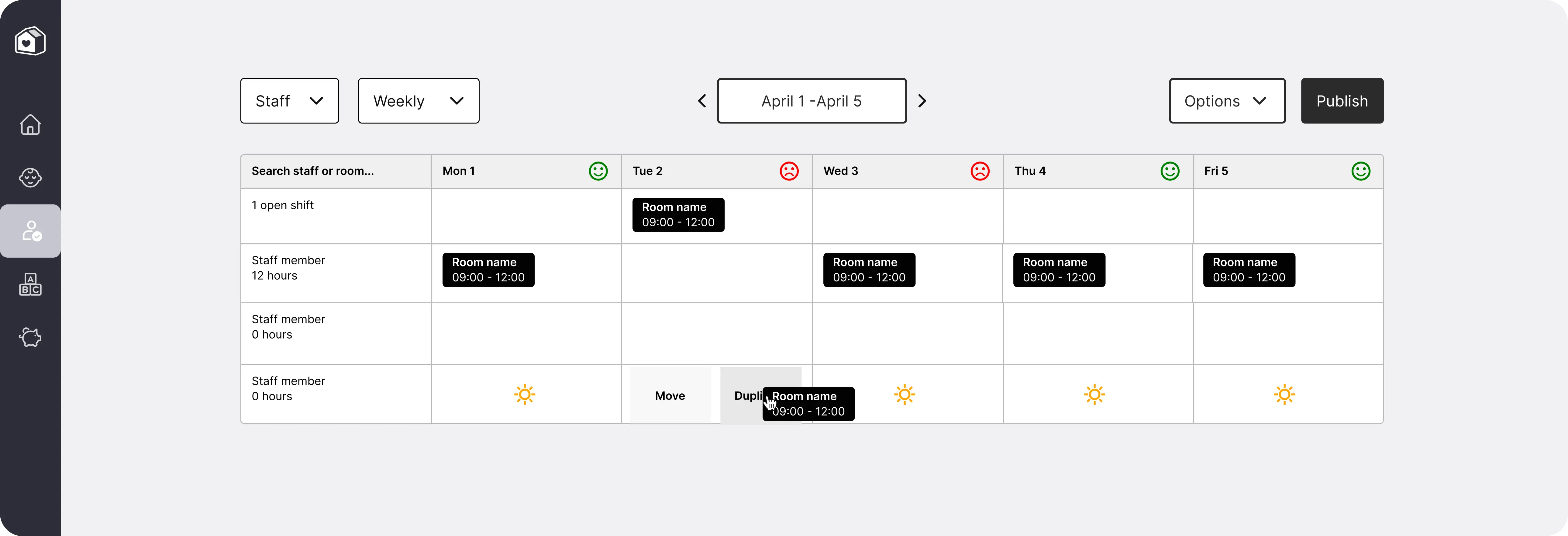
Ratio compliance couldn't live in a separate report. Early wireframes showed the schedule as an independent weekly grid and compliance as a dashboard you'd check afterward. Managers told me that was not ideal, as they needed to see staffing gaps while they were still planning, not after they'd already published the schedule and moved on.
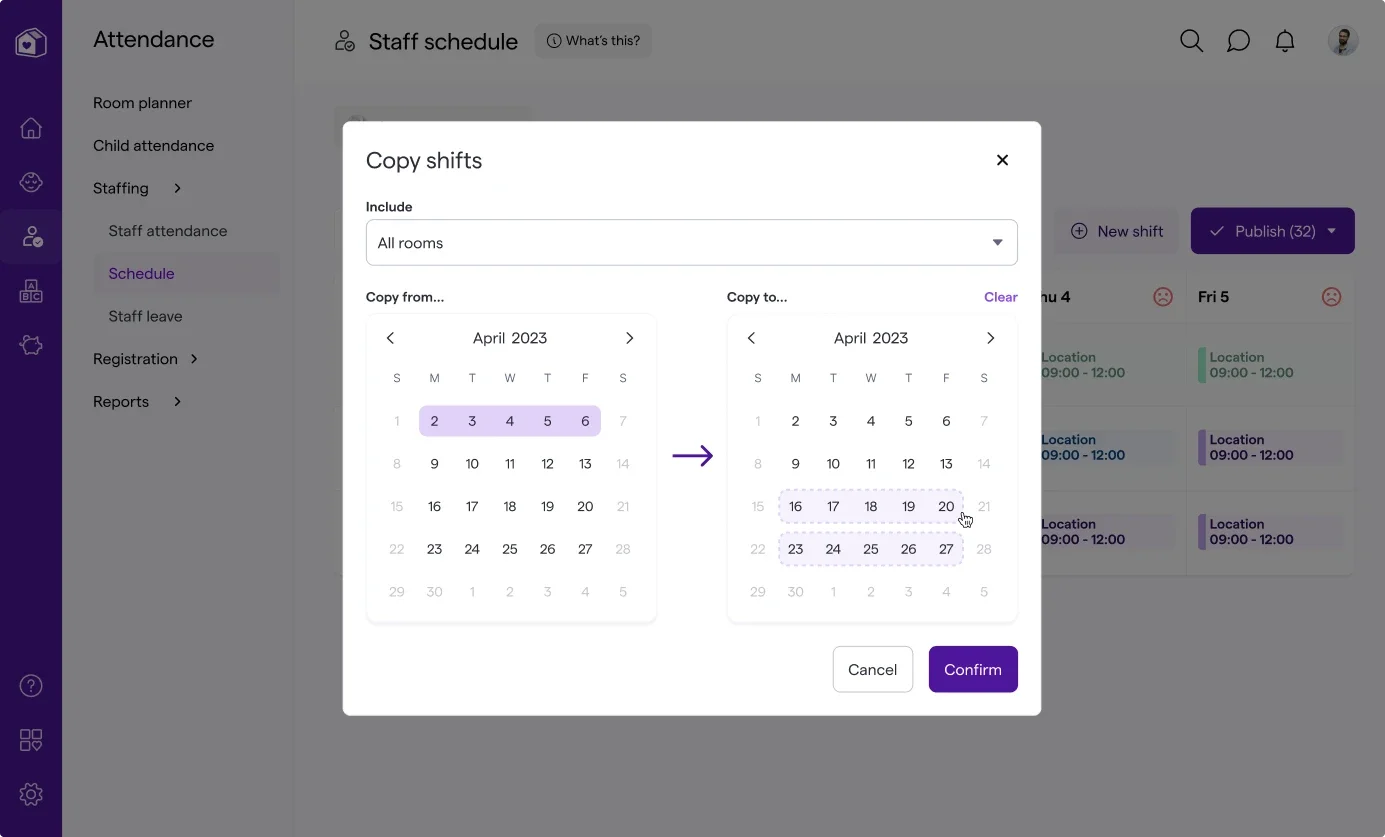
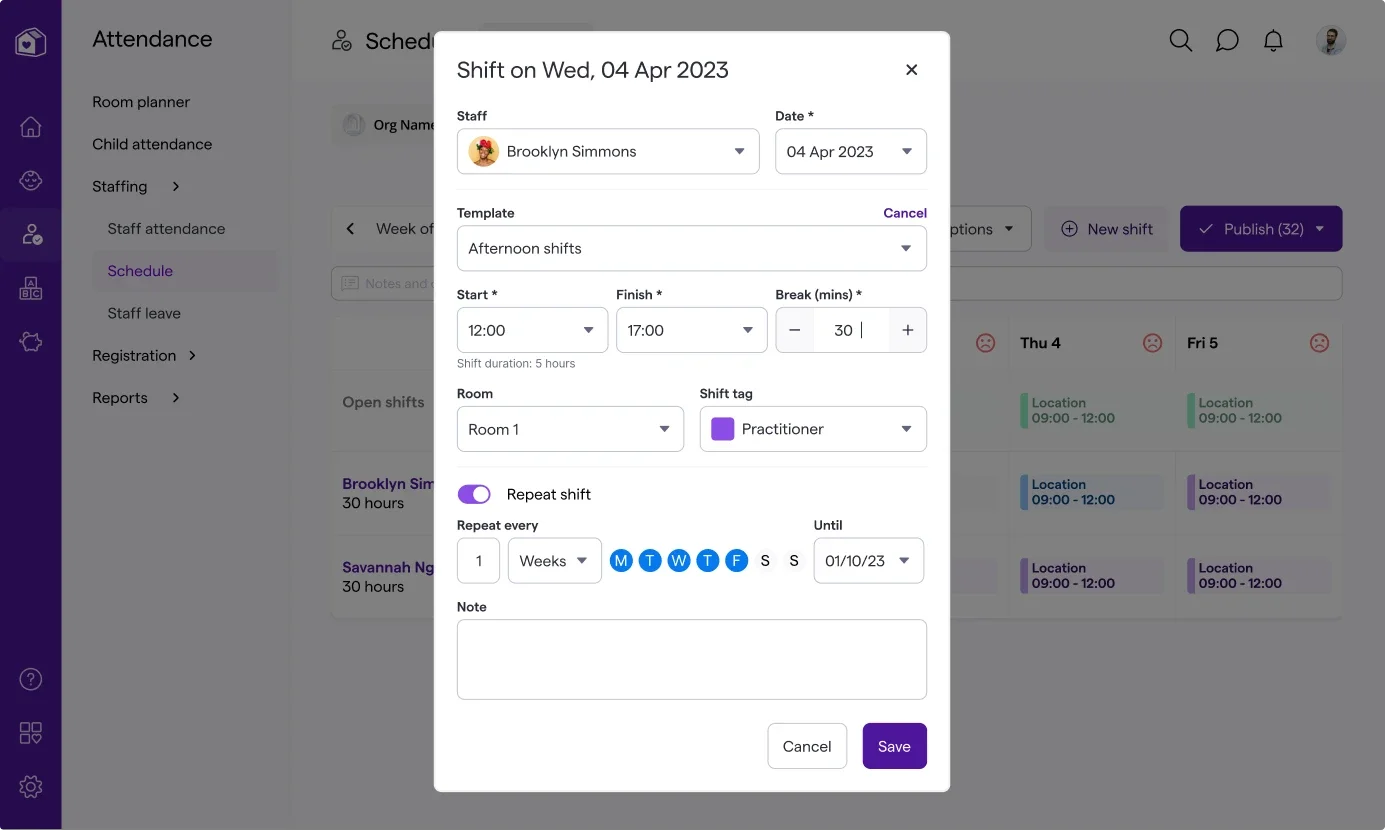
Most schedules are variations of last week. Managers rarely created schedules from scratch. They were copying last week's pattern and adjusting for exceptions. The primary action needed to be "start from last week and modify," not "build a new schedule." Our tool would let managers set up weekly, monthly or daily shift patterns 1-by-1 or in bulk, delete in bulk, label shifts to see admin time, notify shift conflicts, unavailable staff, incorrect ratios, and open shifts.
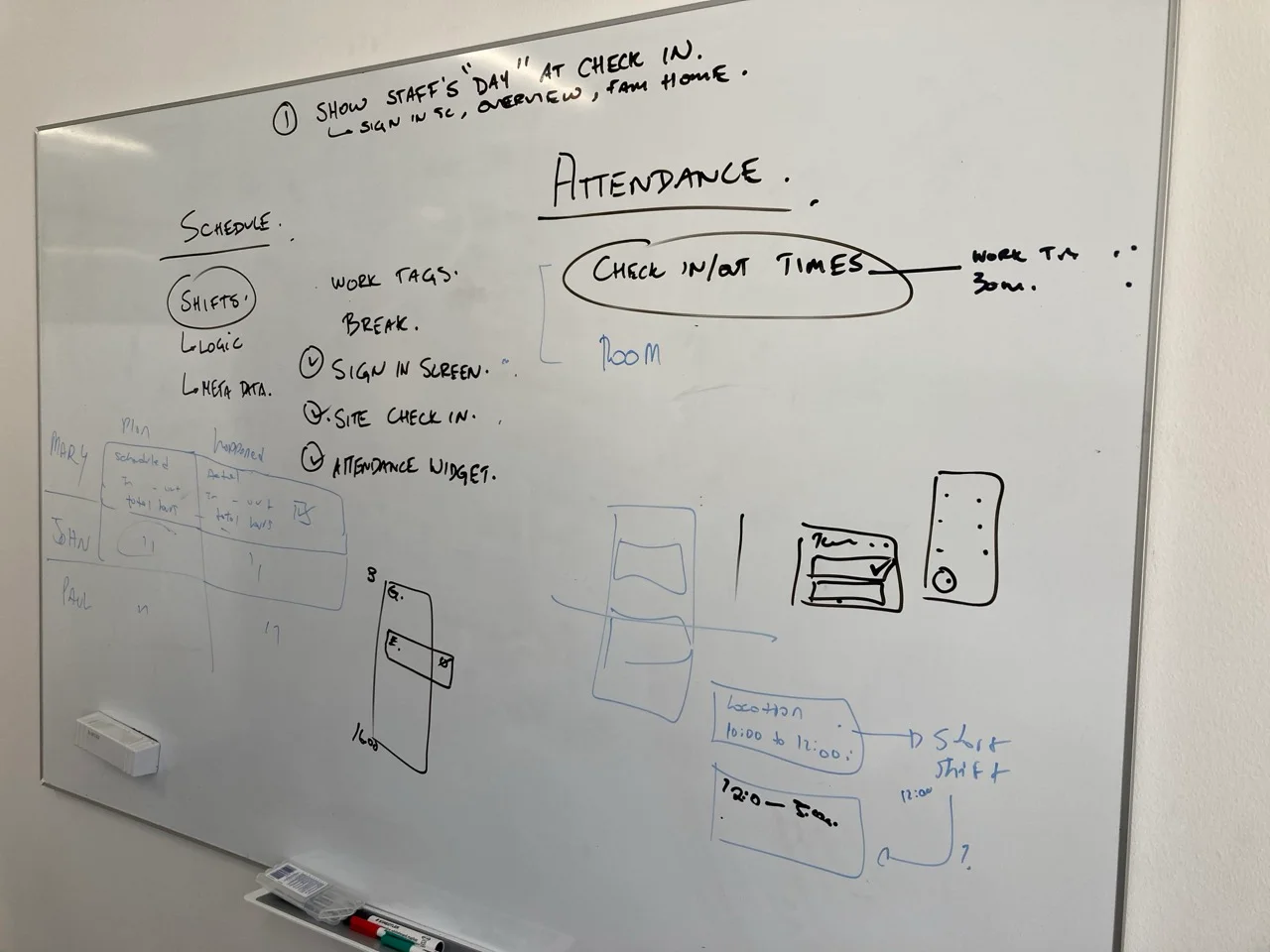
Concept testing and refinement
Balancing compliance and usability is as complex as it sounds. The compliance rules and automation have to be invisible enough that the manager feels in control of their nursery's schedule, but present enough to catch problems, optimize the schedule, and prevent staffing incidents.
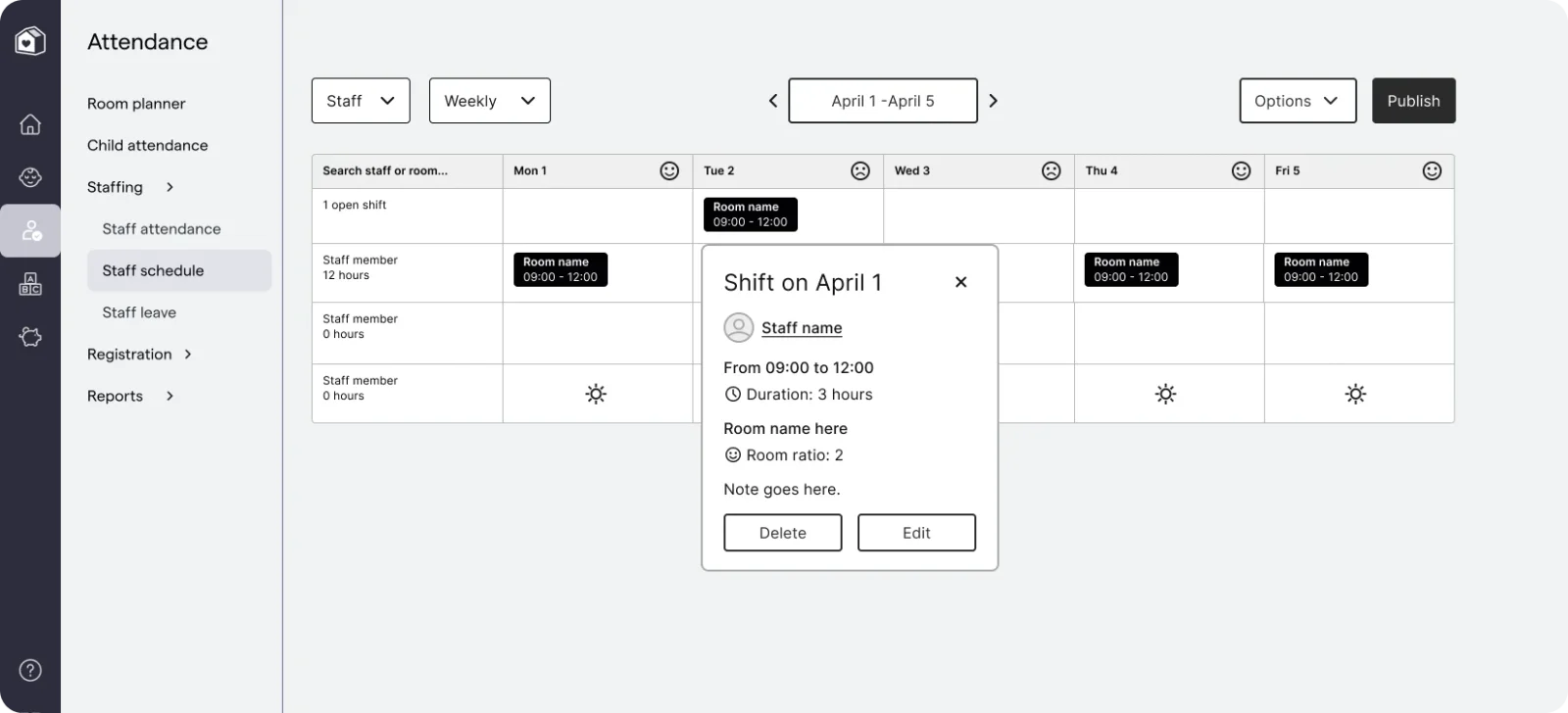
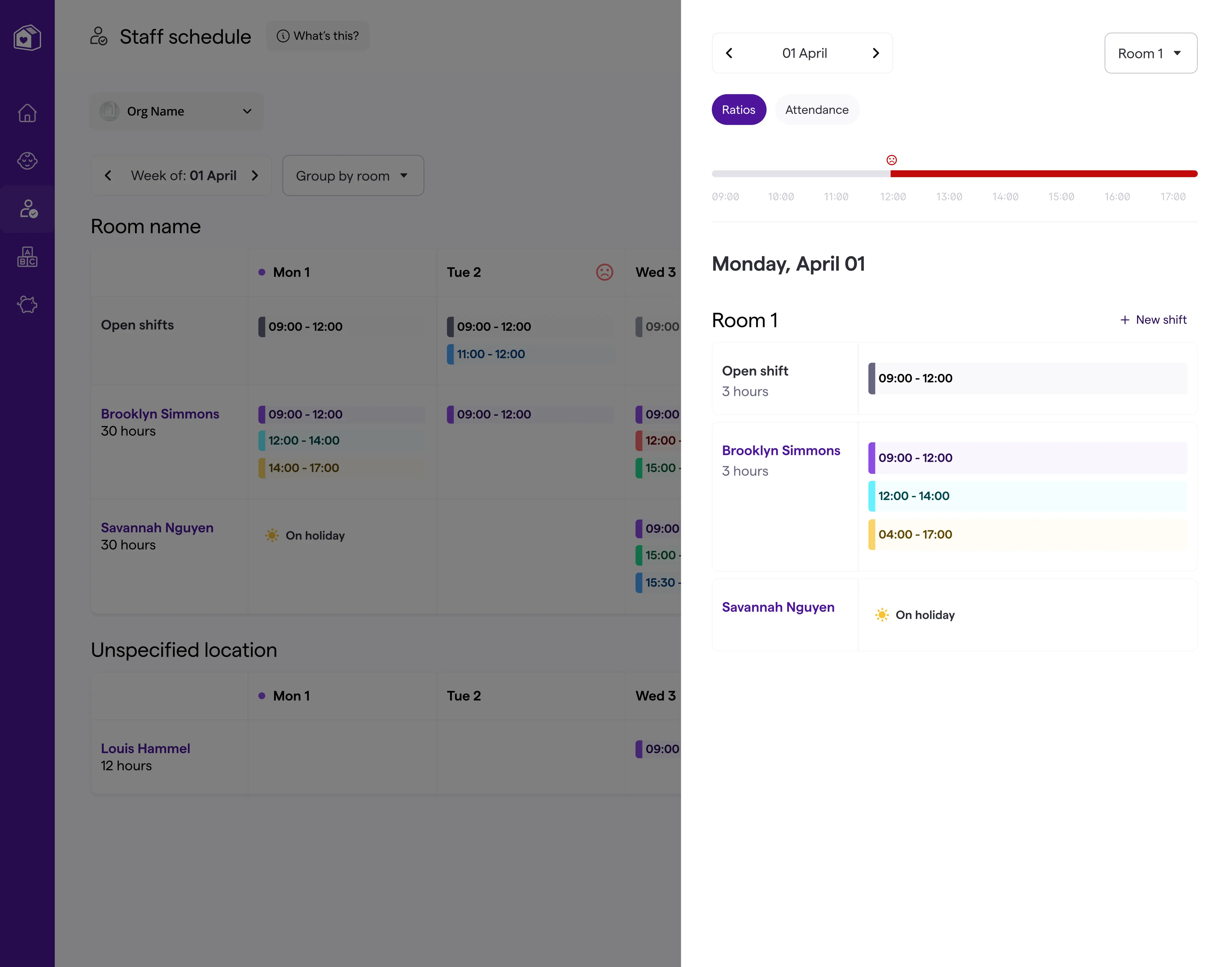
The weekly view proactively flagged potential staffing issues. It was flexible enough to allow quick adjustments, long- and short-term planning and publishing, and bulk operations.
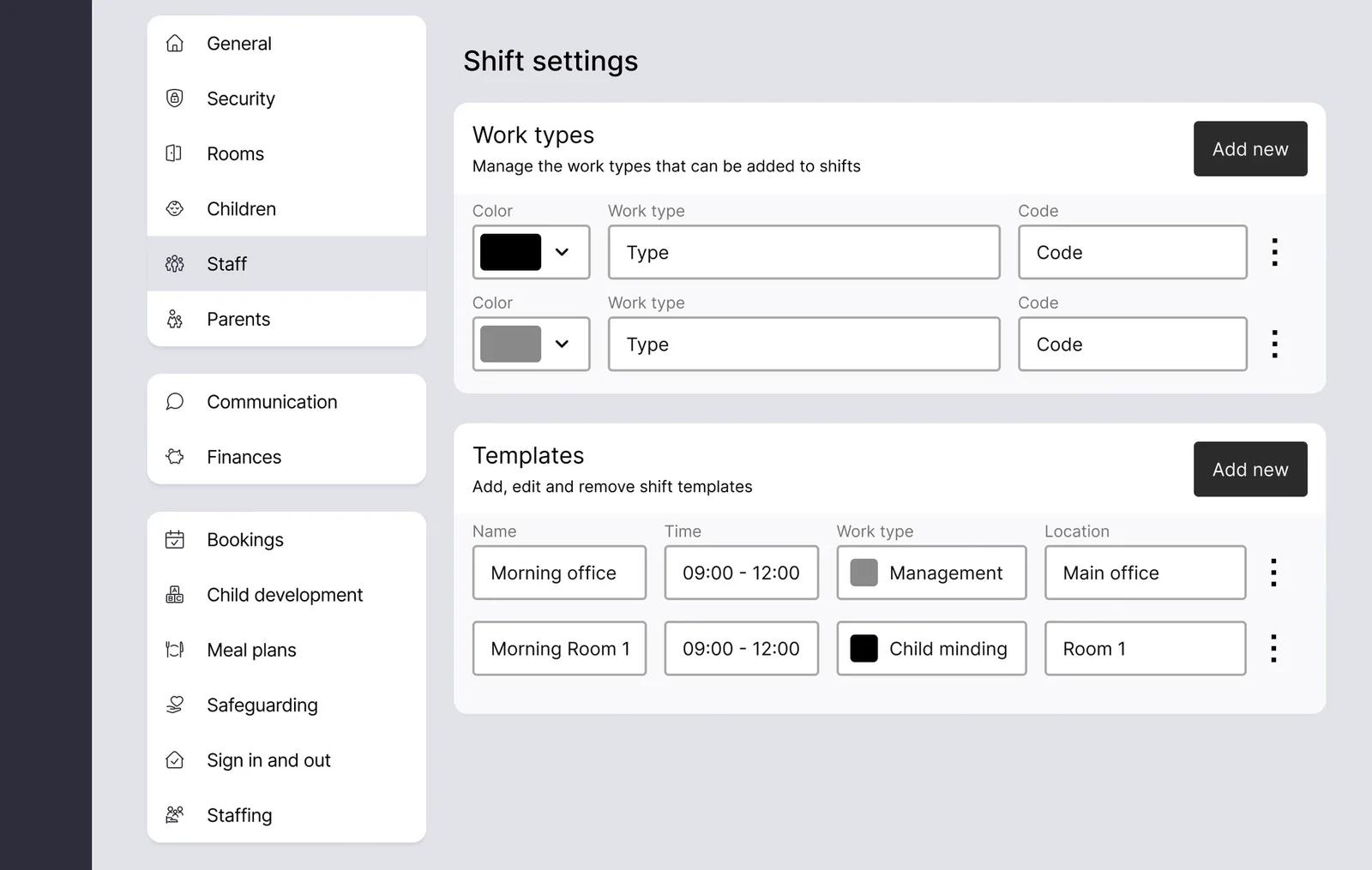
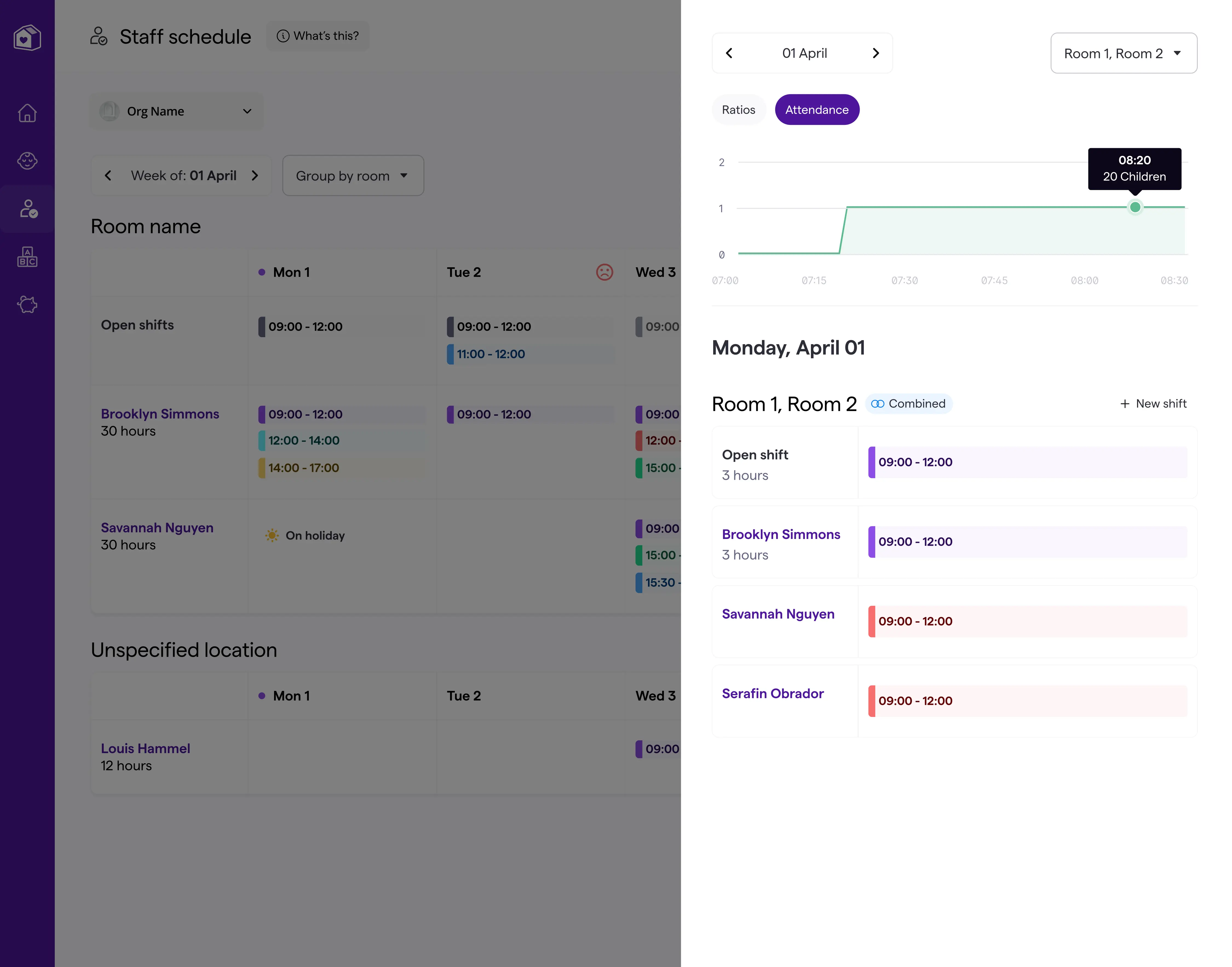
I shared wireframes of what the solution could look like with users and customers, and their feedback helped us refine the designs. One key addition was a detailed hourly overview of ratio and expected attendance. We also added templating, so managers could have a quick start when building schedules.
High-fidelity design and prototyping
At this point, after concept testing and iteration, internal alignment with engineering and business stakeholders, the core scheduling flows had taken shape and were ready for high-fidelity design and prototyping. The key flows were:
- Create shifts individually or in bulk
- Copy an entire week forward
- Work in a draft state before publishing, so a schedule could be built over time without accidentally notifying staff mid-edit.
- Publish schedules weekly or in batch.
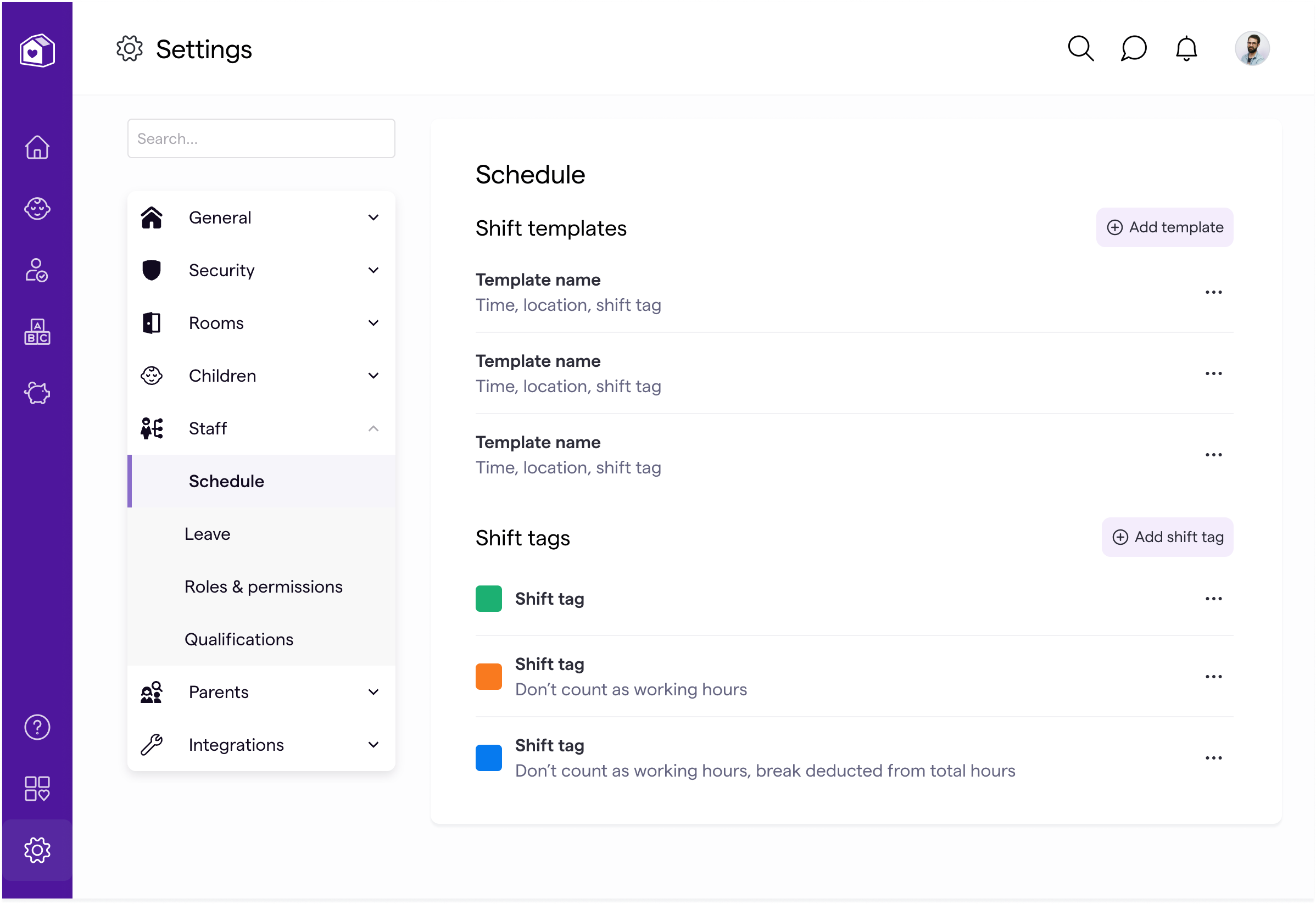
- Templating for frequently-used patterns.
- Work tags connected to the payroll tool, feeding data directly into automation downstream.
- Ratio compliance woven into the grid itself, so staffing issues could be flagged automatically as the schedule was built, before anything was published.
For practitioners
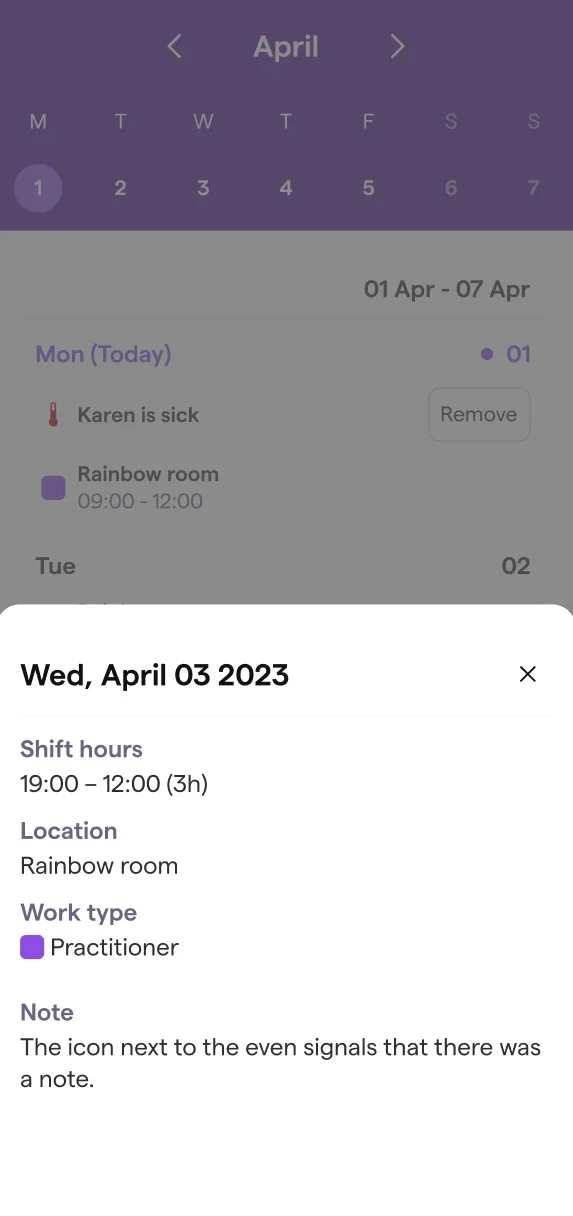
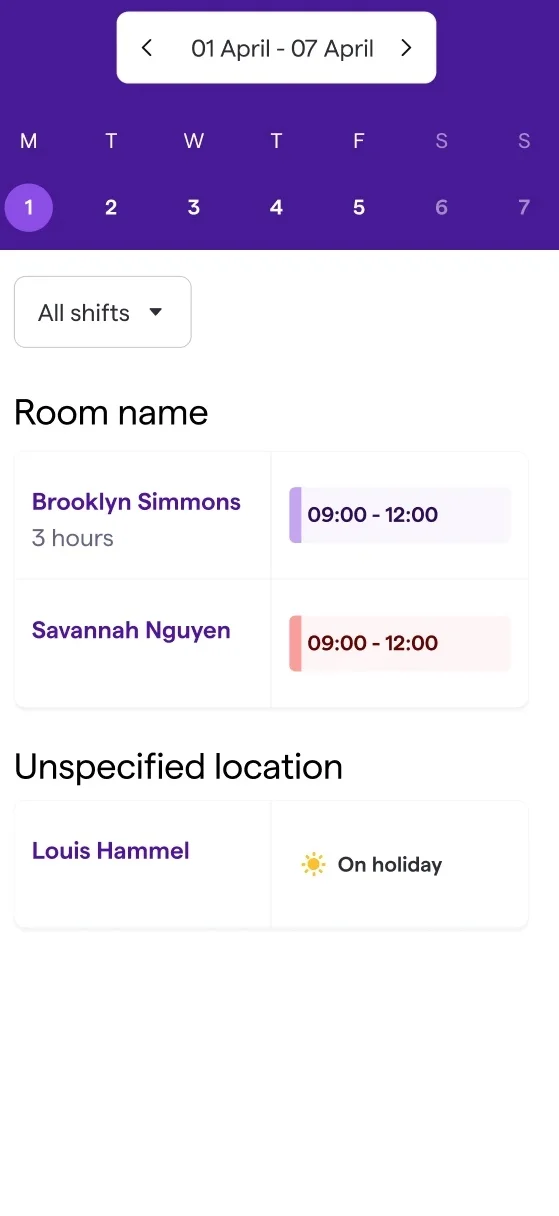
Naturally, the manager's job is to create a schedule for their staff, so the staff experience is also important. For the practitioner-facing part of the product, the solution allowed staff to see their upcoming shifts on their phone, what rooms they would be covering, get notified when new shifts were available or when something changed, and check their schedule from home instead of texting their manager or checking a photo of the break room whiteboard. It closed the communication loop that had been the source of most scheduling friction, and created a reliable source of truth.
Outcome
We launched with a selected group of nurseries via iterative releases that let us validate each piece before expanding scope. Managers said that what had been an entire morning's worth of work now took around 30 minutes, with the benefit that after the first setup, maintaining the schedule was even faster than that. Most feature requests that came in during beta were already planned or in development.
🎯 In beta with 12 nurseries, ratio-related scheduling errors dropped from an average of 4 per week to 0.5. No nursery using the tool had a regulatory violation during the 3-month pilot.
🗓️ 86% of staff said they preferred the new scheduling module over WhatsApp photos, spreadsheets and other methods, mentioning it was more reliable and less prone to miscommunication.
The scheduling tool was one part of a broader staffing system I worked on at Famly. I also designed the expected availability view, staff hours and leave tracking, attendance logging, overtime management, and shift labeling for payroll. Together, these features form what Famly now calls their Efficient Staffing platform, used by over 7,000 nurseries.